

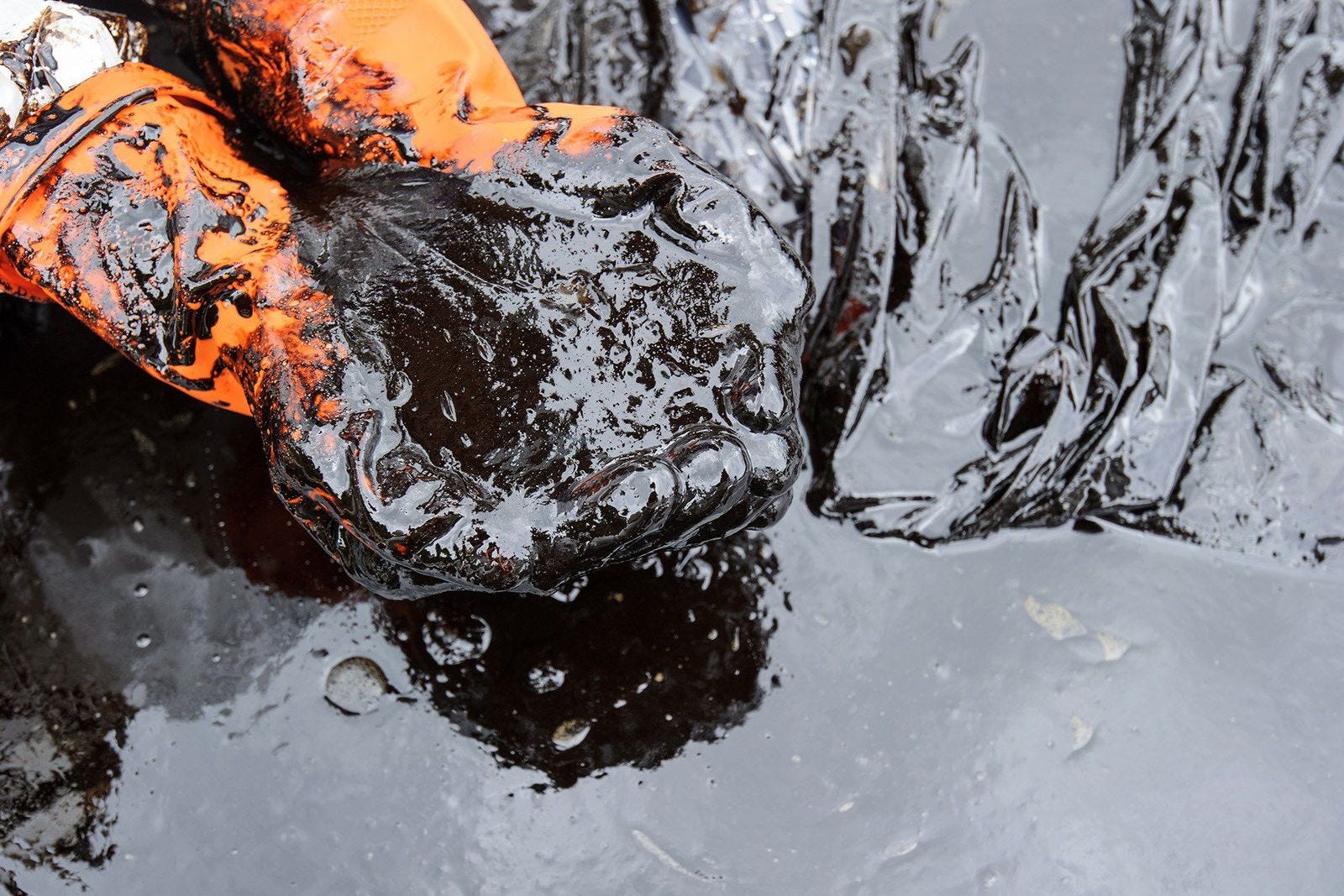
This is an analysis by Nicole Martens, Executive Director of Just Share, about the risk exposure of investors because of historical damage to African communities by oil and gas majors. The exposure is increasingly becoming structural in Africa due to growing litigation against the majors. A useful insight in light of her recent thoughts on fiduciary risk.
For more than a decade, Shell has argued in court that it did not control its Nigerian subsidiary and therefore could not be held responsible for the environmental damage caused there. Newly released internal documents tell a different story. They show senior executives at the parent company not only aware of the risks, but directly involved in decisions that allowed oil production to continue despite the likelihood of further environmental harm.
This contradiction has significant ramifications. Not just for the communities affected in the Niger Delta, but for investors who continue to rely on the same assumptions that underpin Shell’s legal defence.
The first is the idea of distance. Complex multinational structures have long allowed parent companies to claim separation from operational risk. In Africa, in particular, we need not look too hard to find examples. In Zambia, Vedanta Resources PLC spent years arguing it could not be held responsible for toxic heavy metal and water pollution from the Nchanga copper mine, claiming the asset was entirely managed by its local subsidiary, Konkola Copper Mines. In Chad, commodities giant Glencore utilized local corporate entities to isolate liability during major toxic waste and wastewater spills from its Badila oil field operations, deflecting community and civil legal threats away from the Swiss parent entity. In the oil sector (Shell, ExxonMobil, TotalEnergies, Eni), the standard operational playbook has been to run high-risk onshore pipelines via local joint-venture entities, exploit them for decades, and then attempt a clean break via divestment once legacy infrastructure begins to fail.
Investors, in turn, have long taken comfort in that separation, treating subsidiaries as ring-fenced from the broader balance sheet. But the evidence in these documents suggests that such distance is, at best, porous. At worst, it is a legal fiction. When senior executives influence operational decisions, the argument that risk sits neatly at subsidiary level becomes difficult to sustain.
The ‘veil’ is collapsing
For investors, that should trigger a reassessment of where liability truly lies. This is especially true given that global and regional judiciaries are systematically setting aside the classic “corporate veil” defense and holding oil and gas companies to a stricter Parent Company Duty of Care. The precedent set by cases (such as Okpabi vs Royal Dutch Shell Plc, Município de Mariana v. BHP, 2025, among others) to date is that parent companies owe a direct duty of care to local communities, and are strictly liable for subsidiary failures if they knew—or ought to have known—of serious structural and operational defects but allowed operations to continue to protect economic benefits.
The second assumption is more subtle, and more pervasive. Companies operating in regions like the Niger Delta often point to “difficult operating environments” to explain poor outcomes. There is truth in that. Pipeline theft, sabotage and weak local governance all create real challenges. But the documents show something else: that within those constraints, choices were still made. Decisions to continue operating pipelines that required urgent repair. Decisions to tolerate illegal connections to avoid production losses. Decisions to prioritise continuity over caution.
Investor risk
This shifts the matter in an important way. The issue is not simply the environment in which a company operates. It is how it chooses to operate within it. Framed like this, what might be dismissed as an external problem becomes an internal one. Not an operational inevitability, but a governance failure.
That leads to the third and most actionable insight for investors. If risk is created through decisions, then governance is the primary line of defence. Yet too often, stewardship efforts focus on disclosure, policy and targets, rather than on the quality of decision-making at the top. These documents are a reminder that the most material risks may not sit in what companies say, but in how their leaders behave when faced with trade-offs.
This requires a shift in emphasis. Investors need to move beyond surface-level engagement and interrogate the incentives, judgements and oversight that shape critical decisions. Who is in the room when trade-offs are made? What risks are deemed acceptable, and why? How are dissenting views handled? These are harder questions to ask and harder still to answer. But they go to the heart of whether governance structures are capable of managing risk in practice, not just in theory.
Finally, there is the question of cost. Environmental and social risks are often framed as externalities – important, but somehow separate from financial performance. The history of corporate misconduct suggests otherwise. When risks are ignored or deferred, they do not disappear. They accumulate. Legal challenges, remediation costs, reputational damage and regulatory penalties follow, often years after the decisions that set them in motion.
Risk exposure
The Shell documents are a case in point. They expose not just a past failure, but a future liability. And they illustrate a broader truth that investors would do well to remember: if you do not account for these risks now, you will pay for them later.
This is not just a story about one company in one country. It is a test of how investors understand and price risk in complex, global businesses. The comfort of legal structures, familiar narratives about operating environments and reliance on company disclosures can no longer substitute for a clear-eyed assessment of how decisions are made and where responsibility truly sits.
The real risk is not that companies operate in difficult places. It is that investors continue to accept simple explanations for complex, high-stakes choices. Investors only recognise the consequences once they are forced onto the balance sheet - which, given the trend in international and regional legal challenge, is likely to become increasingly common.
The issue is becoming increasingly structural as African communities become more litigious and judiciaries becoming stricter in imposing liability. Oil majors can no longer safely ‘divest’ from legal risks – which increasingly exposes investors to legal and financial risk.
Nicole Martens is the Executive Director of Just Share