

Executive snapshot
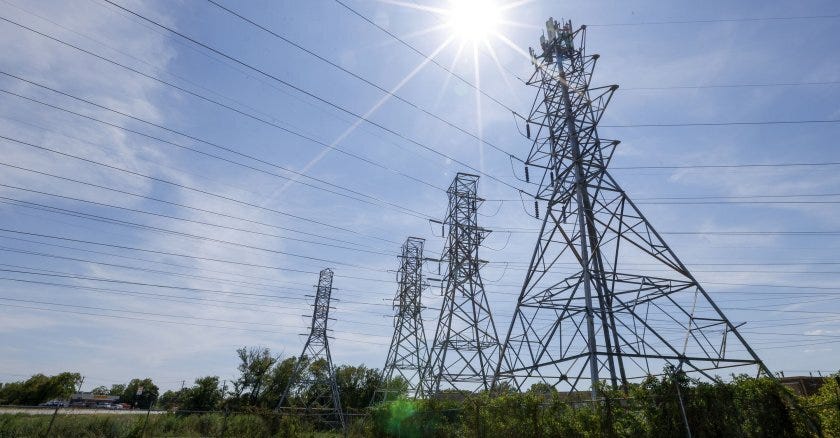
Over November–December 2026, energy reform activity across Africa continued to shift away from generation policy and toward the harder parts of the system: grid capacity, transmission planning, and financing structures. In several markets, renewable generation is no longer the binding constraint. Execution, particularly around infrastructure and capital mobilisation, now defines risk. Therefore the emerging frontier in renewable energy infrastructure investment is transmission & grid infrastructure.
A quiet but important transition emerges: policy permission is largely in place, but system readiness is uneven – both a constraint and an opportunity.
Key reform signals
South Africa
Transmission reform remains the centre of gravity
The unbundling of Eskom and the operationalisation of the National Transmission Company (NTCSA) continue
But grid congestion, especially in renewable-rich regions, remains acute. The legal architecture is now clear; delivery speed is the open question.
Nigeria
Subnational power regulation under the Electricity Act is beginning to shape reform dynamics
Following the Electricity Act 2023, states such as Lagos are now licensing and overseeing distributed and embedded renewable projects directly, shortening approval timelines and reducing exposure to federal regulatory bottlenecks
This shifts renewable-energy risk in Nigeria from national policy uncertainty to state-level execution capacity, allowing investors to treat strong states as distinct, investable power markets rather than as part of a single federal risk profile
Senegal
Attention has moved from policy frameworks to financing
The Renewable Energy & Energy Efficiency Fund (REEF) has shifted the conversation toward blended finance and capital structuring, with investors watching closely for evidence of deployment and governance clarity
Kenya
High renewable penetration has sharpened focus on grid stability, storage, and transmission upgrades
Infrastructure readiness is emerging as the dominant constraint and therefore investment opportunity.
Zambia
Reform discussions continue to centre on transmission rehabilitation and utility viability
Generation frameworks are largely established; system resilience and balance-sheet repair now dominate risk assessments.
Risk trend to watch
Across these markets, reform is no longer about allowing renewables; it is about absorbing them. The core risk has migrated downstream, from policy uncertainty to infrastructure and financing execution. Investors relying on older risk narratives that treat generation policy as the primary hurdle may be misreading where friction now sits.
Where capital may move
Transmission and grid infrastructure are emerging as system-critical investment needs, particularly in South Africa and Kenya
Blended and catalytic finance vehicles are becoming more central to project viability, as seen in Senegal
Distributed and subnational energy models are gaining relevance where central systems remain constrained, notably in Nigeria
These are conditional opportunities, dependent on execution, governance, and clarity on cost recovery.
What to Watch Next (Q1, 2027)
Evidence of grid-expansion financing translating into physical delivery
First disbursements and deal flow under new financing vehicles
Subnational regulatory decisions affecting renewable projects
Court or regulatory actions that materially affect fossil or grid-related assets
Methodology note: AERS tracks regulatory, legal, and institutional developments that materially affect energy investment risk across African markets. Signals focus on direction and structure, not deal promotion.